The Federation
Bhutan's game, and its future.
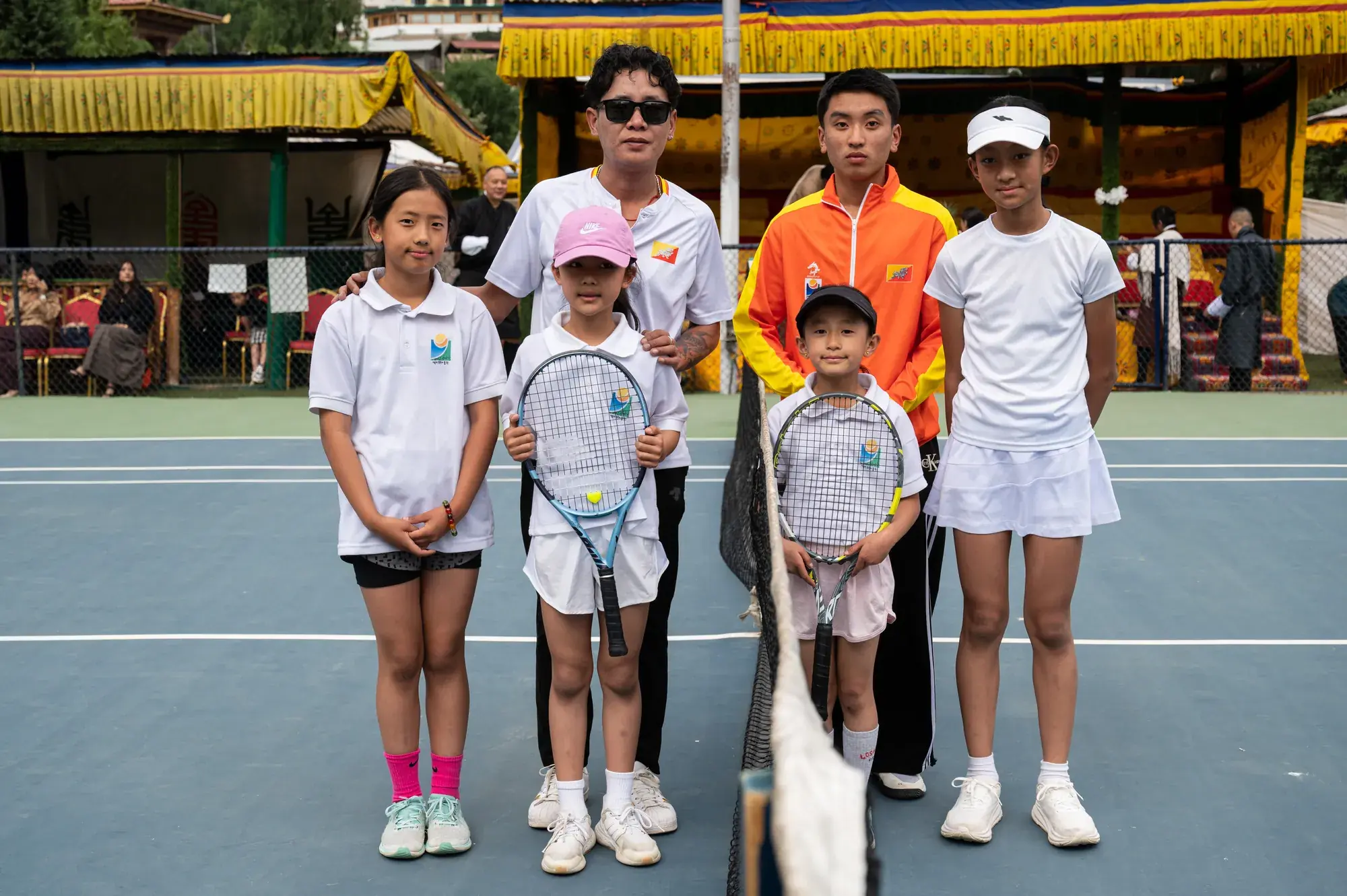
Founded in 1983 and a full member of the ITF and the ATF, the Bhutan Tennis Federation runs the National Tennis Centre in Thimphu — and the pathway that carries a Bhutanese child from a first lesson to an international draw.
01 — Who we are
One federation, four courts, and a country's worth of ambition.
Tennis reached Bhutan in the 1970s. The Federation was founded in 1983, and four decades on the National Tennis Centre beside Changlimithang Stadium is where the national team trains, where the junior championships are played, and where anyone in Thimphu can sign up for a game.
We are the national governing body for the sport: we run the competitions, we certify and develop the coaches, we select and send the teams that carry the flag abroad, and we look after the courts everyone plays on.
What follows is what we are trying to build, who leads it, and the coaches who do the work every day on court.
Vision
A tennis nation, recognised by the world.
Bhutan is recognised globally as a tennis nation — as a competitor on the world stage, a host of international events, and a premier destination for the sport.
Mission
From school courts to the world stage.
Build an inclusive, high-performance, and self-sustaining tennis ecosystem that takes Bhutanese talent from school courts to the world stage — while establishing Bhutan as a globally respected host and destination for the sport.
Objective
A clear pathway, built to last.
Develop a clear talent pathway from schools through to international competition, supported by world-class infrastructure, qualified coaching, strong governance, and long-term financial sustainability.
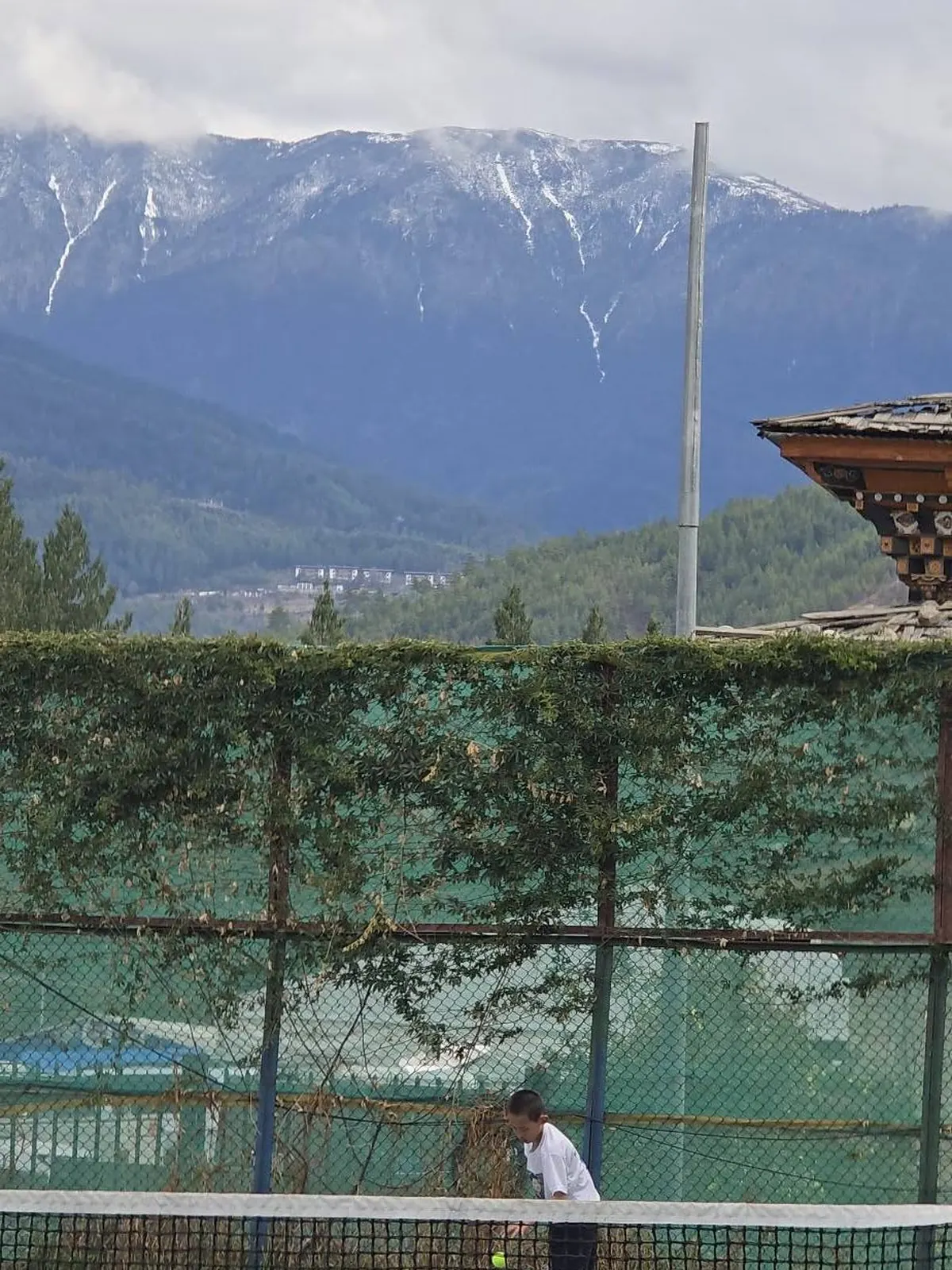
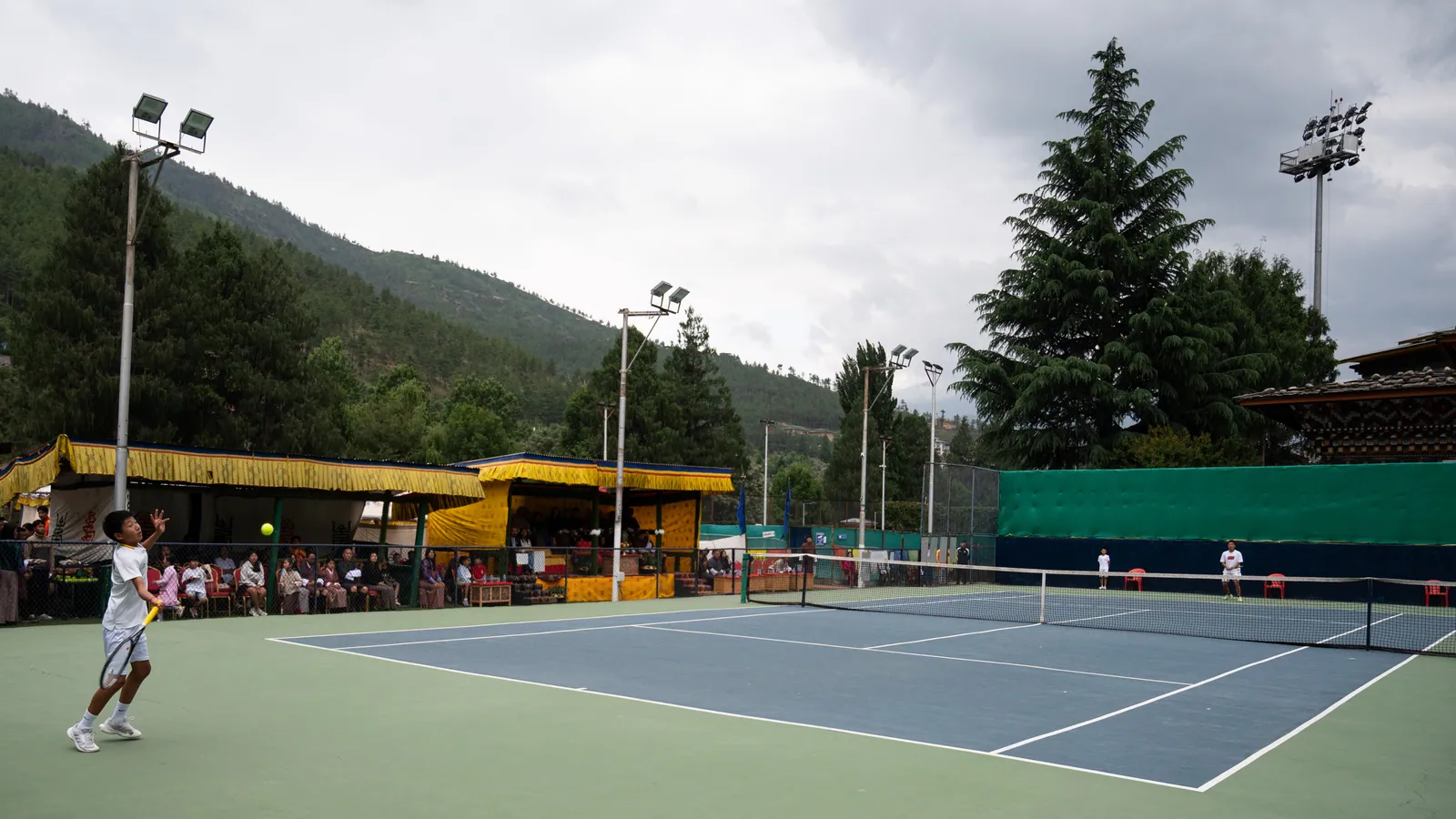
Under the snow line · Championship evening at the National Tennis Centre
02 — Executive committee
The people who steer the Federation.
The executive committee sets the direction of Bhutanese tennis — the ten-year framework, the national squads, the facilities, and the partnerships that pay for them.
03 — Our coaches
The staff who run the squads.
Three head coaches and a group of volunteer coaches carry the whole junior programme between them — the 6:30 in the morning advanced squad, the after-school beginners, and every tournament in between.
Head coach
Coach Dikshit
Leads the advanced squad through both of its daily sessions — the 6:30 AM group before school and the evening group that runs until quarter to eight.
Head coach
Coach Tashi Dorji
On court for every squad on the timetable, from the newcomers' group on Monday afternoons to the under-18s in the evening.
Head coach
Coach Yonten Gyeltshen
Works across the advanced and beginner groups, and travels with the squads that represent Bhutan abroad.
Volunteer coach
Jigme Sherab
Assists the under-14 to under-18 advanced squad in the evening session.
Volunteer coach
Jigme Pema
Works with the beginner and intermediate group on Mondays, Wednesdays and Fridays.
Volunteer coach
Wangsel
Works with the beginner and intermediate group on Mondays, Wednesdays and Fridays.
Volunteer coach
Dechen Wangyel
Works with the beginner and intermediate group on Mondays, Wednesdays and Fridays.
Volunteer coach
Jamyang Choeda
Works with the beginner and intermediate group on Mondays, Wednesdays and Fridays.
Coaching staff listed on the 2026 junior squad training timetable
04 — On court
The people who do the work on court.
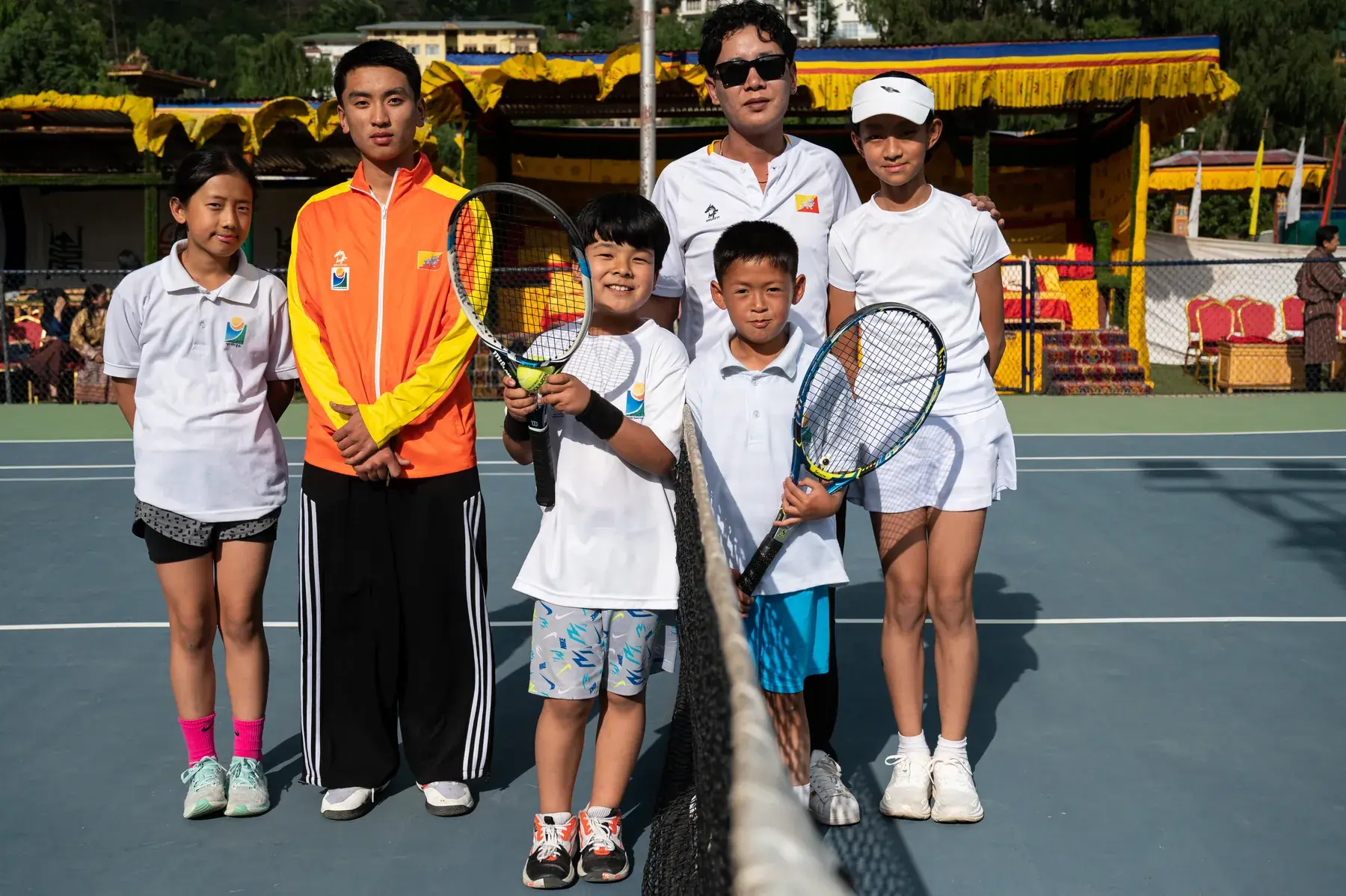
Feeding balls at half past six in the morning, driving to a school with a bag of racquets, standing at the net after a lost match. This is the part of a tennis programme nobody photographs — so we did.
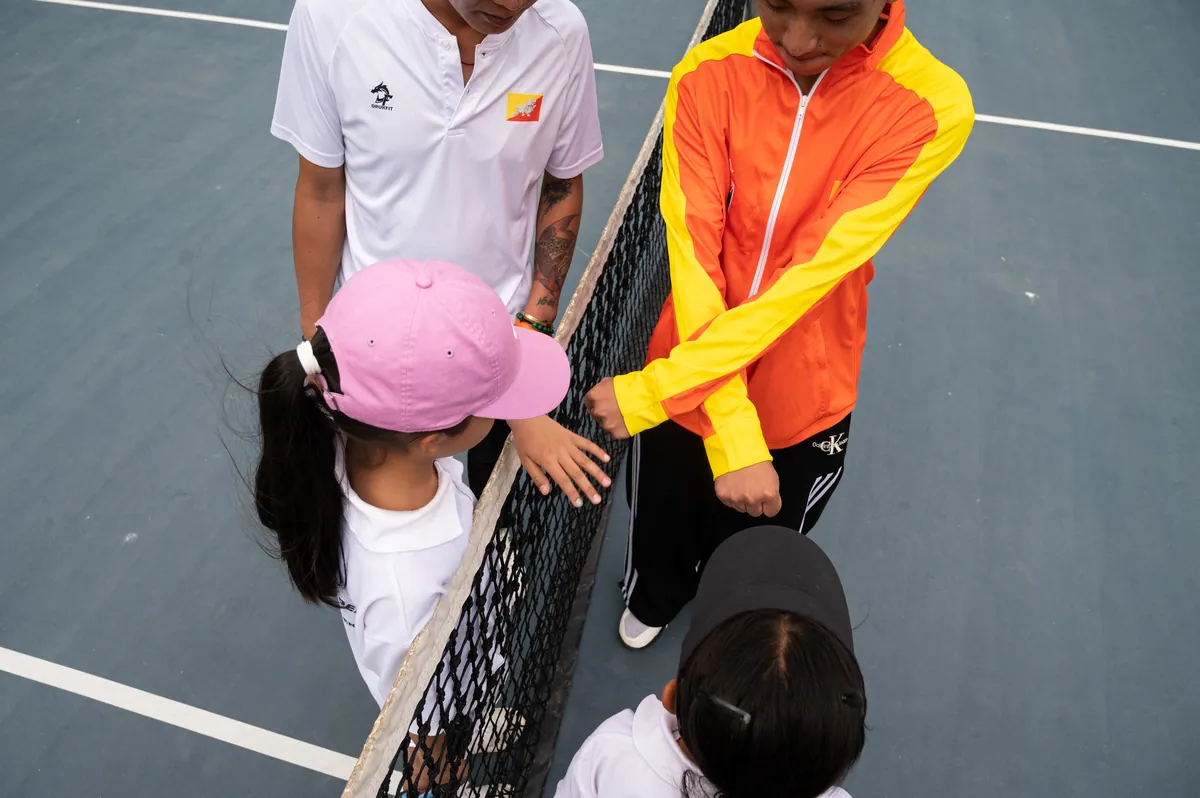
Little Champs
Eye level, always
The youngest group runs on short courts, low-compression balls and a great deal of crouching down to talk to someone properly.
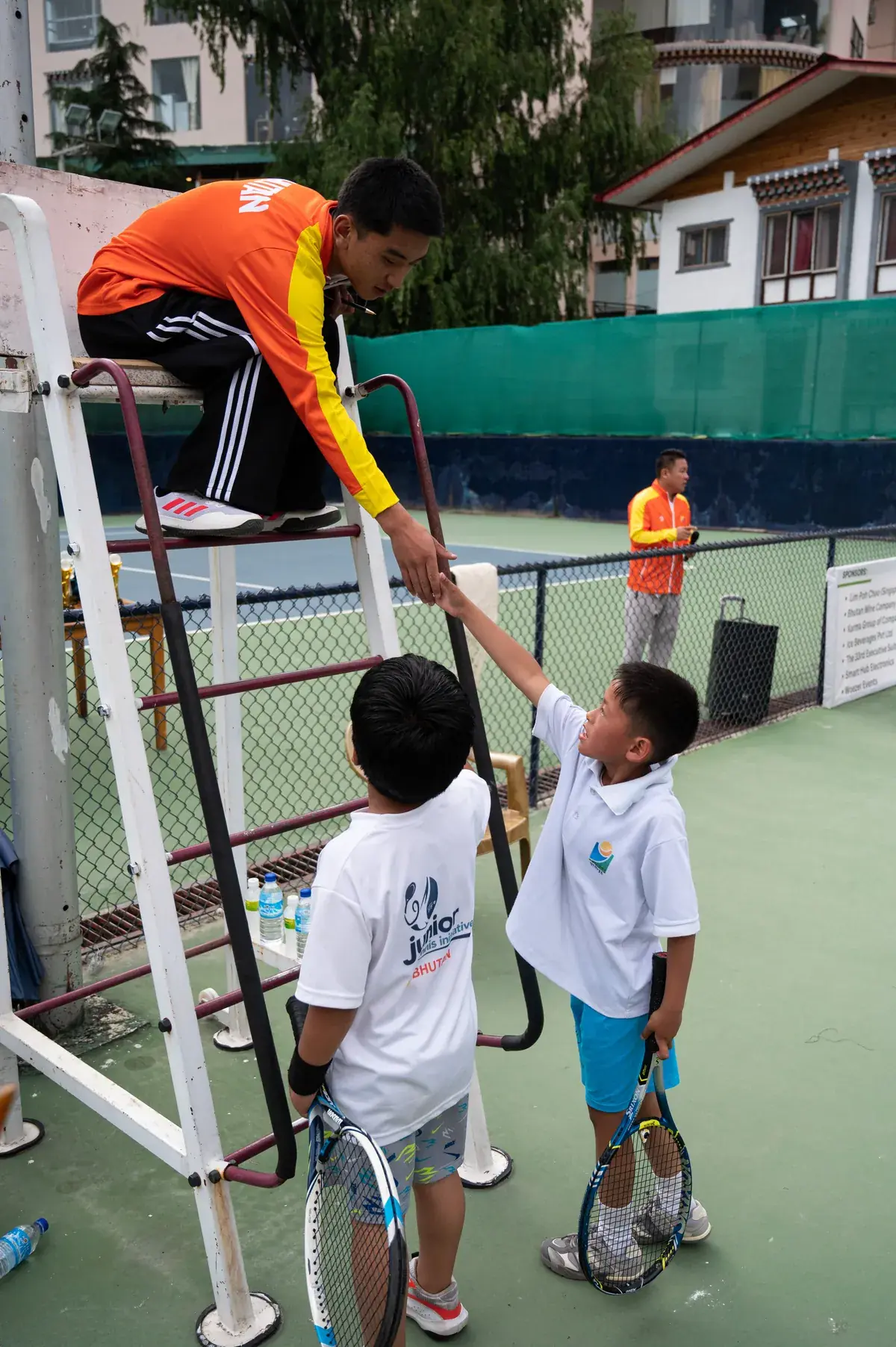
Officiating
From the chair
Coaches umpire as well as coach. Certifying more Bhutanese officials is one of the nine pillars of the ten-year framework.
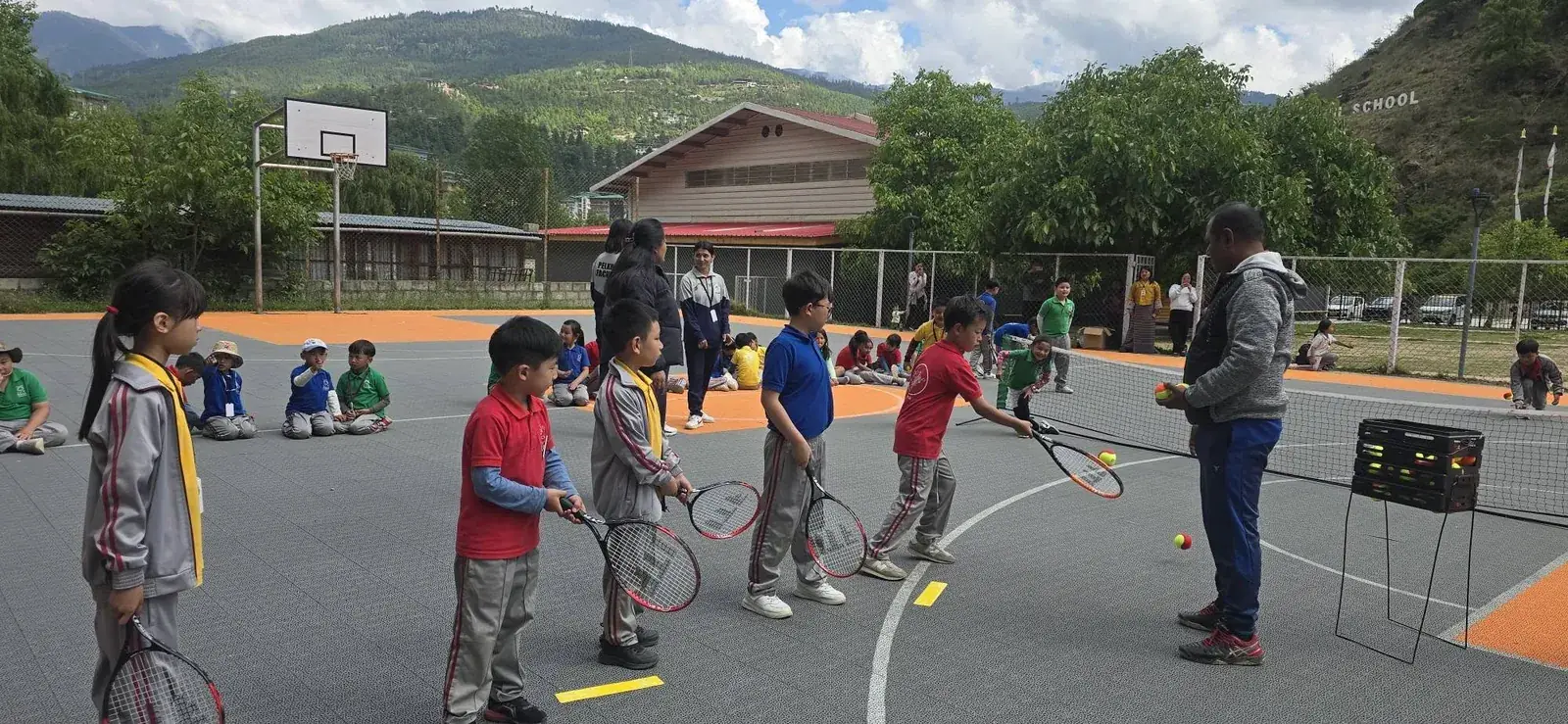
School outreach
Off the mountain, into the schools
Racquets, a net and a car boot full of balls. School visits are how most children in Bhutan meet the sport for the first time.
The ten-year framework calls for 25 or more Bhutanese coaches certified by the ITF and the ATF. Building that group is the single biggest thing standing between our juniors and an international ranking.
05 — Membership
By the hour or by the year.
Membership is open to Bhutanese and to visitors alike — whether you live in Thimphu or are here for a posting, a project or a quick tour. Members book courts at the National Tennis Centre free of charge; anyone else can walk in and pay by the hour.
Membership and walk-in fees · GST included
| Plan | Bhutanese | Non-Bhutanese |
|---|---|---|
| Yearly | Nu. 12,600 | USD 210 |
| Half-yearly | Nu. 6,300 | USD 158 |
| Monthly | Nu. 1,050 | USD 53 |
| Walk-inper hour | Nu. 210 | USD 11 |
- Prices include 5% GST — Bhutan's Goods and Services Tax
- Students are exempt up to the age of 25
- Non-Bhutanese can pay in USD or the ngultrum equivalent
Scan to pay

- Pay to
- Bhutan Tennis Federation
- Bank
- Bhutan National Bank (BNB)
- A/C no.
- 650440291
Scan with your bank app, then e-mail us a screenshot of the payment with your name.
Save the QR codeDream.
Play.
Achieve.
Get in touch
Come and see it.
Play at the National Tennis Centre
Members, residents and visiting players all book through the same app. Four hard courts, open year round.
Book a courtWork with the Federation
Sponsorship, coaching partnerships, an event you would like to bring to Thimphu — write to the Federation office.
E-mail us